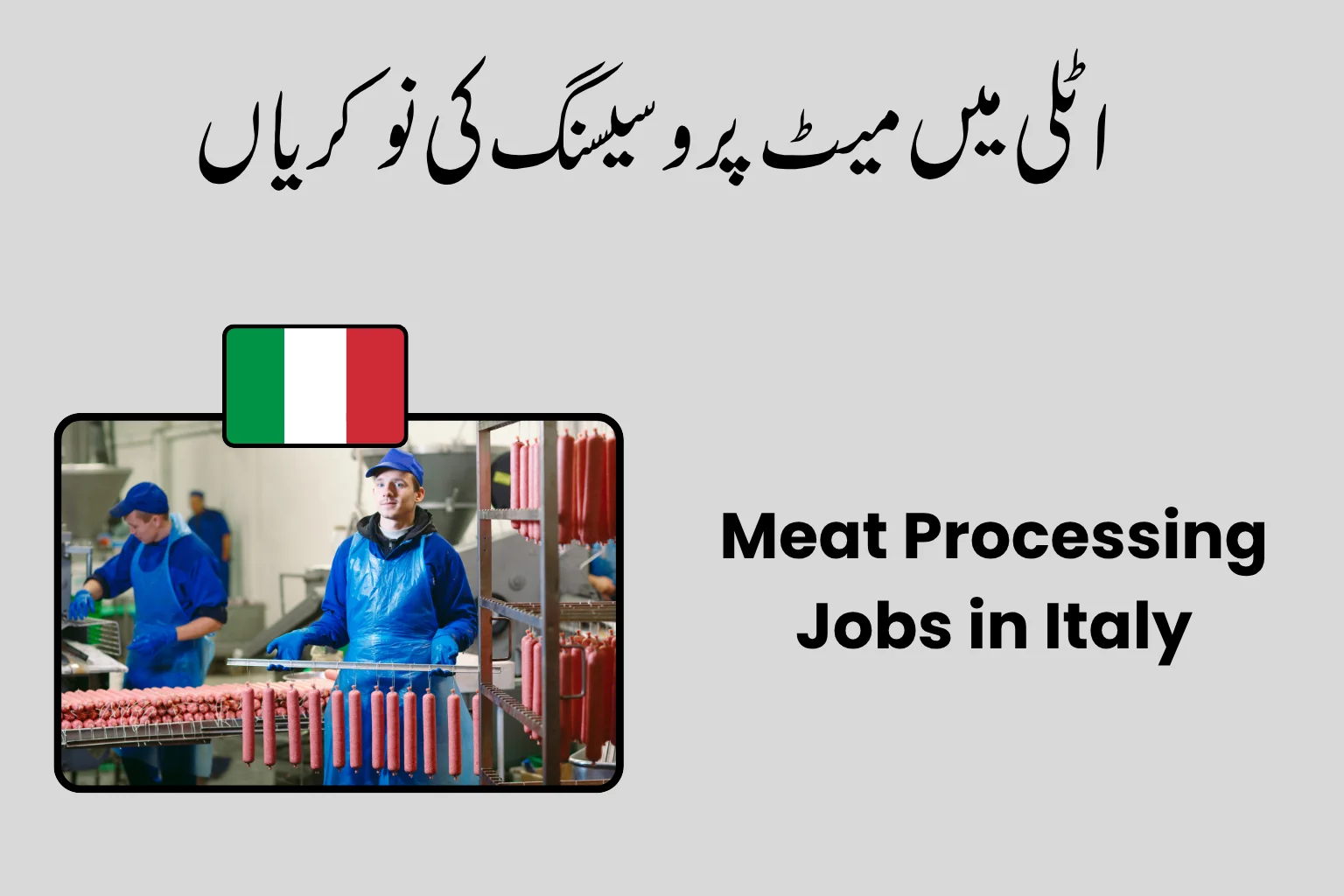
Meat processing jobs in Italy are an important part of the country’s food and agri-food industry, which is one of the strongest sectors in Europe. These jobs involve working in slaughterhouses, meat factories, packaging plants, and food production units where beef, pork, chicken, and processed meat products are prepared for local consumption and export.
In 2026, Italy continues to face labor shortages in the food processing industry, especially in physically demanding roles. Because of this, meat processing companies frequently hire foreign workers through legal contracts and work permits.
These jobs are ideal for entry-level workers who are looking for stable income, simple entry requirements, and opportunities to work legally in Europe.
Why Meat Processing Jobs in Italy Are a Good Opportunity
Meat processing jobs are attractive for several reasons:
- High demand in Italy’s food manufacturing sector
- Entry-level hiring (no education required for most roles)
- Stable monthly income with overtime pay
- Legal work opportunities for foreign workers
- Training provided on the job
- Year-round employment in large factories
- Opportunities in both rural and industrial areas
The Italian agri-food industry is a major employer, and meat processing plants are an essential part of the supply chain from farm to supermarket.
Types of Meat Processing Jobs in Italy (2026)
1. Meat Cutter / Butcher Assistant
- Work: Cutting, trimming, and preparing meat
- Salary: €1,200 – €1,800/month
- Requires basic knife handling skills
2. Slaughterhouse Worker
- Work: Handling livestock processing, cleaning, preparation
- Salary: €1,300 – €2,000/month
- Physically demanding role
3. Meat Packing Worker
- Work: Packaging meat products, labeling, sealing
- Salary: €1,100 – €1,600/month
- Entry-level friendly
4. Production Line Worker (Factory)
- Work: Working on conveyor belts, processing meat products
- Salary: €1,200 – €1,900/month
- Shift-based work (day/night shifts)
5. Quality Control Assistant
- Work: Checking hygiene, safety, and product standards
- Salary: €1,500 – €2,500/month
- Requires some experience or training
Meat Processing Salaries in Italy (2026 Overview)
| Job Type | Monthly Salary |
|---|---|
| Meat Packing Worker | €1,100 – €1,600 |
| Production Line Worker | €1,200 – €1,900 |
| Butcher Assistant | €1,200 – €1,800 |
| Slaughterhouse Worker | €1,300 – €2,000 |
| Quality Control | €1,500 – €2,500 |
Average hourly pay typically ranges between €7 and €13 depending on experience, shift type, and region.
Some workers may also receive:
- Overtime pay
- Shift allowances (night work bonus)
- Free or subsidized accommodation in rural factories
Job Responsibilities
Typical tasks in meat processing jobs include:
- Cutting, trimming, and processing meat
- Operating machines and production tools
- Packaging and labeling products
- Maintaining hygiene and safety standards (HACCP rules)
- Cleaning work areas and equipment
- Supporting production line operations
- Checking product quality
Many companies provide full training, especially for entry-level workers.
Work Visa for Meat Processing Jobs in Italy
To work legally in Italy as a meat processing worker, non-EU applicants need a work visa sponsored by an employer.
Key points:
- Employer applies for work authorization (Nulla Osta)
- Jobs are often included in Italy’s seasonal or labor quota system (Decreto Flussi)
- After approval, the worker applies for a visa at the Italian embassy
- Visa allows legal employment in Italy
Italy continues to issue agricultural and food industry work permits due to ongoing labor shortages in 2026.
Eligibility Criteria
To apply for meat processing jobs in Italy, you usually need:
- Minimum age 18 years
- Valid passport
- Good physical fitness
- Ability to work in cold environments (factories)
- Willingness to work shifts
- Basic understanding of instructions (Italian or English helpful)
- Clean criminal record
- Job offer from an Italian employer
No formal education is required for most entry-level positions.
Required Documents
- Valid passport
- Passport-size photos
- Updated CV
- Job offer or employment contract
- Work permit approval (Nulla Osta)
- Medical certificate (if required)
- Police clearance certificate
- Visa application form
Step-by-Step Guide: How to Apply
Step 1: Search for Jobs
Use trusted job platforms:
- https://www.eures.europa.eu
- https://it.indeed.com
- https://www.cliclavoro.gov.it
- https://www.manpower.it
- https://www.randstad.it
Step 2: Apply to Meat Processing Companies
Target:
- Meat factories
- Food processing plants
- Slaughterhouses
- Packaging companies
- Recruitment agencies in agriculture and food industry
Step 3: Receive Job Offer
If selected:
- Employer issues contract
- Applies for work permit (Nulla Osta)
- Submits application under immigration quota system
Step 4: Apply for Visa
After approval:
- Apply at Italian embassy
- Submit documents
- Attend interview if required
Step 5: Travel and Start Work
Once visa is approved:
- Travel to Italy
- Register residence permit
- Start working under contract
Skills Required
- Physical strength and stamina
- Ability to work in cold environments
- Teamwork and discipline
- Basic machine handling
- Attention to hygiene and safety rules
- Speed and efficiency
Benefits of Meat Processing Jobs in Italy
- Legal employment in Europe
- Easy entry-level hiring
- Stable monthly salary
- Overtime opportunities
- Training provided
- Experience in international food industry
- Possibility of long-term contracts
Challenges
- Physically demanding work
- Cold and noisy factory environments
- Repetitive tasks
- Shift-based schedules (including night shifts)
- Strict hygiene rules
FAQs
1. Do I need experience for meat processing jobs in Italy?
No, many entry-level jobs provide training.
2. What is the salary of meat factory workers in Italy?
Around €1,100 to €2,500 per month depending on role and experience.
3. Can foreigners apply for meat processing jobs in Italy?
Yes, but a job offer and work visa are required.
4. Is accommodation provided?
Some employers offer accommodation or support, especially in rural areas.
5. Is Italian language required?
Not always, but basic Italian improves job opportunities.
6. Are these jobs permanent?
Many are contract-based or seasonal, but extensions are possible.
Conclusion
Meat processing jobs in Italy in 2026 offer a realistic opportunity for foreign workers looking for stable employment in Europe’s food industry. With simple entry requirements, steady demand, and legal work visa pathways, these jobs remain one of the most accessible options for non-EU applicants.
If you are physically strong, ready for industrial work, and looking for a legal job abroad, meat processing jobs in Italy can be a solid starting point for your international career.
